
Introduction
Now as digital transformation accelerates, organisations are generating and processing more data than they ever have before. The evolution of technology has put real-time data processing at the forefront of so many fields; from smart devices to autonomous vehicles, industrial sensors to connected healthcare systems. Historically cloud computing has been central in the support of a modern technology infrastructure, but when working with data that is time-sensitive it may not always be the optimal solution. This has given birth to a new idea called edge computing, where resources are placed as close as possible to the place where they apply data. With its potential to reduce latency, increase performance, and enhance security, edge computing can be a vital part of modern digital ecosystems.
What Is Edge Computing?
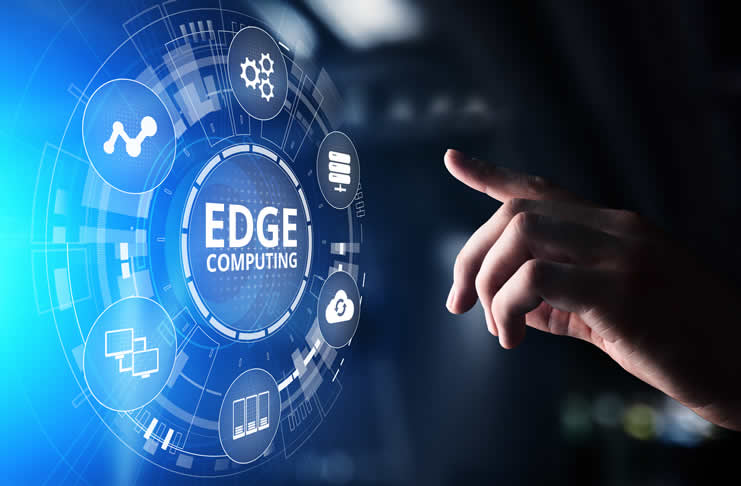
Edge computing is a distributed computing architecture that takes place at or near the source of its data generation. The “edge” includes any device, sensor, gateway or local server that is close to the users (or connected equipment). Rather than sending large volumes of data over long distances, edge computing allows you to process the data locally, analyze it and take a decision.
For instance, an edge-enabled smart security camera can analyze video streams and identify atypical activity without offloading each frame to a cloud server. Processing this data locally enables quicker responses and requires less bandwidth to transmit data.
Reasons Behind the Rise of Edge Computing
The growing number of Internet of Things (IoT) devices is one of the main factors behind the rising implementation of edge computing. Every day bring about immense amount of data generated by billions of connecting devices. Pushing all this data on centralized data centers can be a bottleneck of the network and lead to increased operational costs. Edge computing enables organizations to control this data by processing relevant information locally and communicating only necessary insights with the cloud.
The need for real-time applications is also one of the leading factors boosting adoption. For industries like healthcare, manufacturing, transportation, and retail instant access to data processing is necessary to support business-critical operations. Edge computing is they key pointing solution for the system performance especially delay of even few milliseconds is regarded very badly in performing edges.
Key Benefits of Edge Computing
Reduced Latency One of the major benefits of edge computing is reduced latency. Because data is processed near its point of creation, information must travel shorter distances to reach the end user; as such, faster response times. By far, this is quite vital for applications like the autonomous vehicles, industrial automation, and online gaming.
Better Bandwidth Efficiency: Organizations can minimize network traffic by processing data in a local environment versus sending every piece of information to the cloud. This reduces the communication cost and alleviates pressure on network infrastructure.
Edge computing also enhances reliability. Local devices can process critical data and perform key functions, even if connectivity to the cloud becomes temporarily interrupted. This feature is especially useful in remote areas where internet access can be intermittent or lackluster.
Edge computing can also enhance security and privacy. It can process and keep sensitive information locally, so there is less risk of this information being exposed while it makes its way across the wire. This helps organizations achieve compliance and secure sensitive data.
Real-World Applications of Edge Computing
Edge computing is revolutionizing many industries. Wearable technology and medical equipment in the healthcare sector will improve patient monitoring and notify health providers instantly with abnormal diagnosing. In manufacturing, a smart factory employs edge devices that analyze how machines are operating, predicting when maintenance is required before equipment fails.
Edge computing has enhanced the transportation industry with intelligent traffic management systems and autonomous vehicle technology which need. Edge computing helps retail businesses enhance customer experiences through curated recommendations, intelligent inventory management, and automated checkout.
Another application area, where IoT is blossoming like a flower, whilst blooming beyond its capacity is Smart cities. Edge computing powers connected infrastructure — from traffic lights to surveillance systems and environmental sensors — optimizing the operation of cities and enabling them to react quickly to shifting conditions.
Challenges and Future Outlook
However, even with all its advantages, edge computing also introduces a number of challenges. Most of the time managing distributed systems is complicated and organizations need to have proper monitoring and maintenance. Security risks also rise when edge devices are not adequately protected or were not updated.
Nonetheless, the combination of emerging artificial intelligence and 5G & IoT technologies are poised to increase edge computing market growth rate in future. Edge computing will be integral among digital innovation as businesses look for viable methods of processing data quickly, reliably and cost-effectively.
Conclusion
Edge computing is also changing the way an organisation manages its data by pushing processing power to where information is created. It provides benefits in form of reduced latency, improved efficiency, enhanced security and greater reliability making it a must-have for modern applications and connected technologies. With the ever-changing digital landscape, businesses will need to understand and take advantage of edge computing to stay ahead in a highly data-driven environment.